Has anyone neoprene lined a whole lake?

Stargazer

Surin Legend
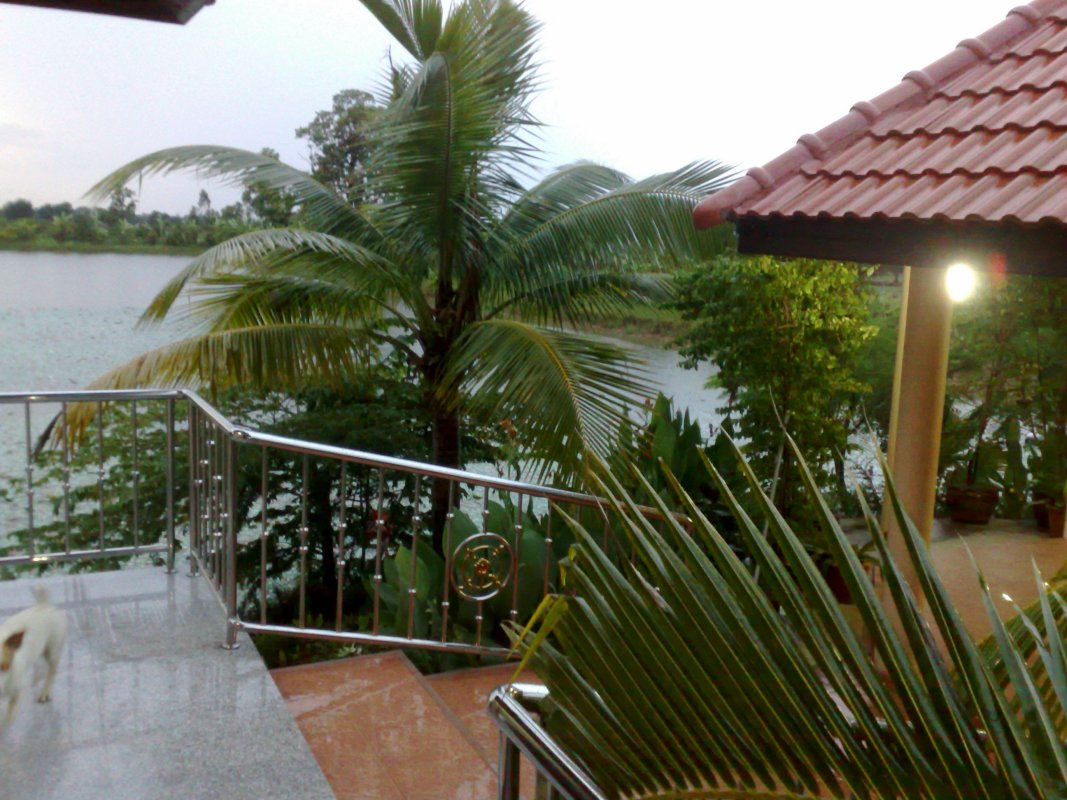
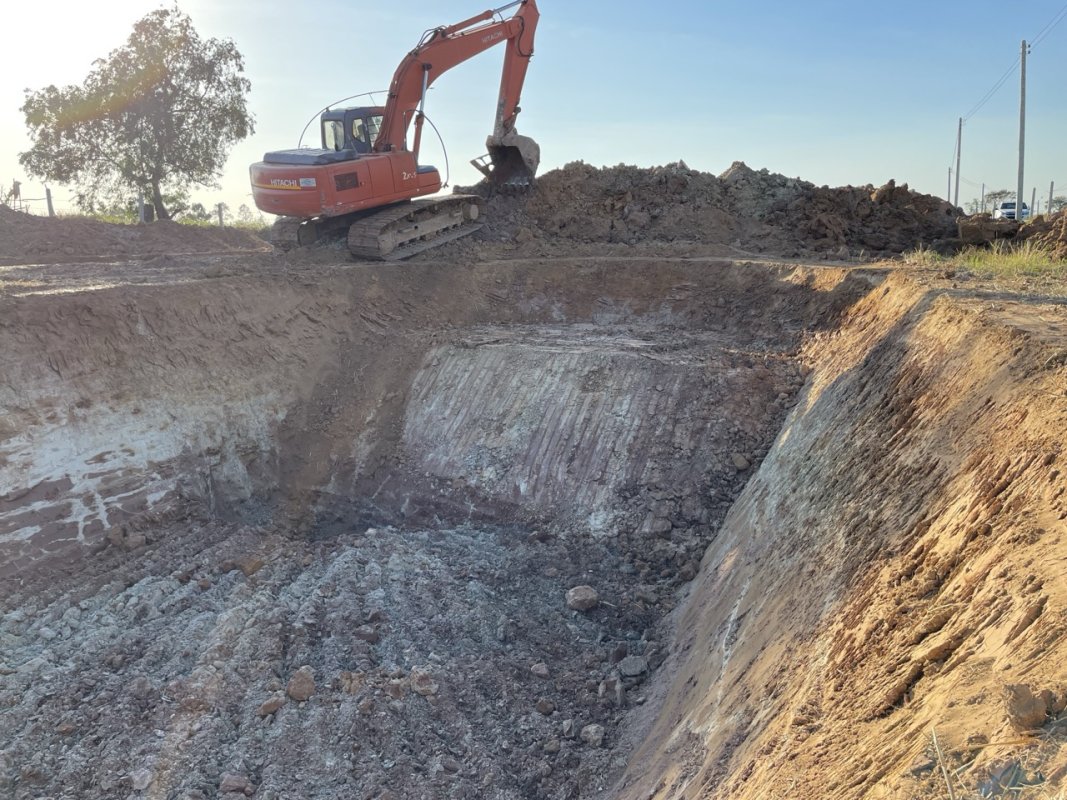
As we renovate our small lake (about 11m x 19 m x 4m deep), being forced to line the perimeter due to gradual erosion from rain and fish digging, it occurs to me that if it were possible to buy a neoprene liner that was perhaps 20m x 25m, we could completely line the bottom. Currently, due to the fish stirring up the fine clay bottom, the lake is always muddy. My wife would prefer to be able to see the fish, especially the big koi. If it were lined, and we provided a continual input of well water, it might stay pretty clear for years. Has anyone done this? I have noticed that some of the fish dig little potholes in the bottom, maybe lay eggs? Of course, that would be stopped. So I see two issues: would the fish be OK with a lined pond, and is it actually possible to buy such a big liner? All suggestions welcome, especially from experience rather than just opinion.
 
I used this method for our 1 rai pond, GYPSUM CaSO4⋅2H2O.....mix the correct amount into a water slurry, you can get the amount req'd by pond volume size and search the internet for how many bags you need. GYPSUM acts as a floculant and settles the water bound particles to the bottom....the good thing is it does not harm fish or pond life.
Cheap to buy too.
 
I used this method for our 1 rai pond, GYPSUM CaSO4⋅2H2O.....mix the correct amount into a water slurry, you can get the amount req'd by pond volume size and search the internet for how many bags you need. GYPSUM acts as a floculant and settles the water bound particles to the bottom....the good thing is it does not harm fish or pond life.
Cheap to buy too.
Worth a try! Three questions: where can one buy that particular gypsum in quantity in Surin, how did you mix it into the big pond, and how long did it keep the water clear?
 
Worth a try! Three questions: where can one buy that particular gypsum in quantity in Surin, how did you mix it into the big pond, and how long did it keep the water clear?
Mango 2 you 2: Thanks. Found the scientific papers. 150 mg/L × 1,000 L = 150 g gypsum per 1,000 L. Is a moderate recommendation. Global seafood site says you can just sprinkle the gypsum on the surface and let it dissolve. Apparently it can take several days to work. I’ll do a jar test first as recommended. The visibility in our pond currently is about 15cm!
 
Last edited:
Mango 2 you 2: Thanks. Found the scientific papers. 150 mg/L × 1,000 L = 150 g gypsum per 1,000 L. Is a moderate recommendation. Global seafood site says you can just sprinkle the gypsum on the surface and let it dissolve. Apparently it can take several days to work. I’ll do a jar test first as recommended. The visibility in our pond currently is about 15cm!
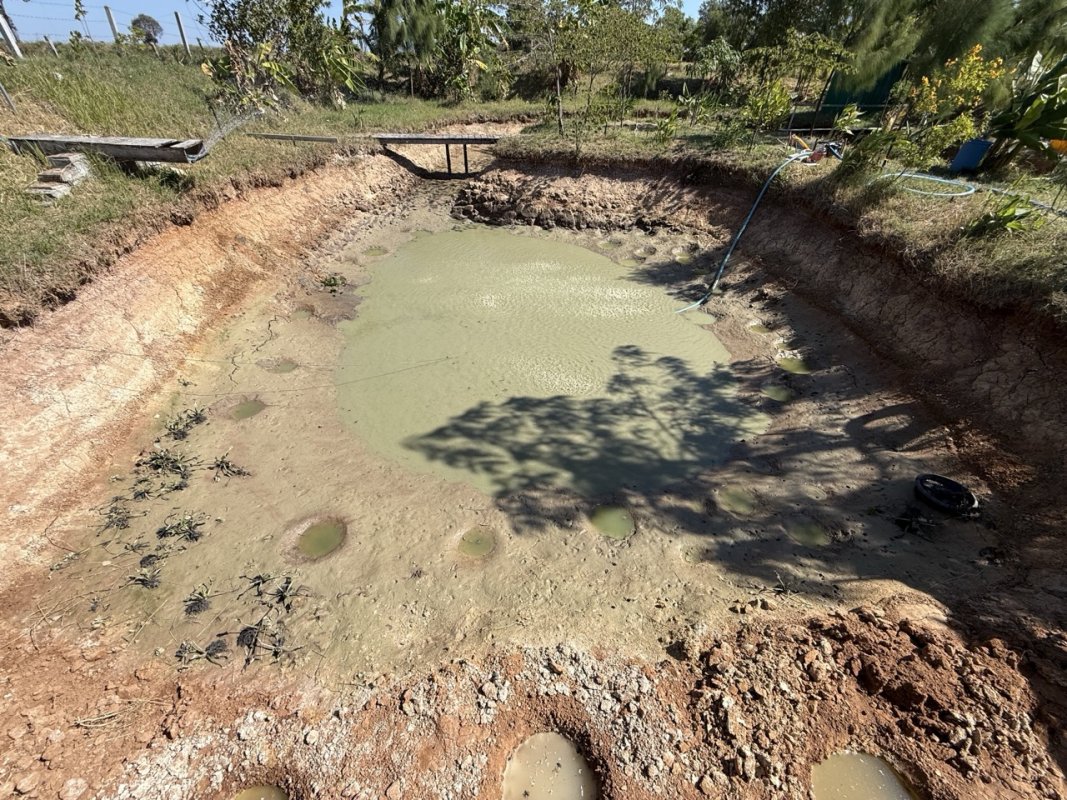
I failed to realize that we have two visibility issues. We pumped the lake way down, and found that as we did, the olive greenness of the water increased. I took 1 ½ liter samples into empty clear water bottles, and applied CaS04. Little clearing. So then I discovered that a good way to look for phytoplankton without a compound microscope was to put the samples in the dark for several days. Bingo. The green tint disappeared, so I could try titrating for a correct dose of CaSO4. So now my problem is also how to control the phytoplankton. Could be my wife is over feeding the fish, leading to excess nutrients in the water. People who have koi ponds often have a UV element in their filtration system to address this. We don’t have a filtration system given that the lake is about 800,000 liters, originally 4 meters deep. One issue we discovered on nearly emptying the lake was that some of the fish are digging potholes all over the bottom (see picture attached). Such mucking about does seem responsible for stirring up clay. It does seem to have softened the shape into a bowl. We’ve also noticed that our oxygen levels may be low (apparent fish ‘gasping’ at the surface in the mornings). Koi ponds address this with bubble oxygenation, which apparently is much more energy efficient than pumping water to aerate it with fountains. Any suggestions from your experience with a large lake, Mango 2 you 2? I’d consider a filtration system, but I don’t have a good place for it, and no experience with such long term. My Hawaiian experience taught me that systems like that are high maintenance.1766615971906.jpeg

1766616041241.jpeg
 
Last edited:
I dug it out about 25yrs ago.
I use it for fishing and watering my 7 rai of garden and mango trees.
Plachon are like small crocodiles.
Lining settling ponds and water storages are common practices in remote/ dry mining areas, massive tasks though.
 
Back
Top